
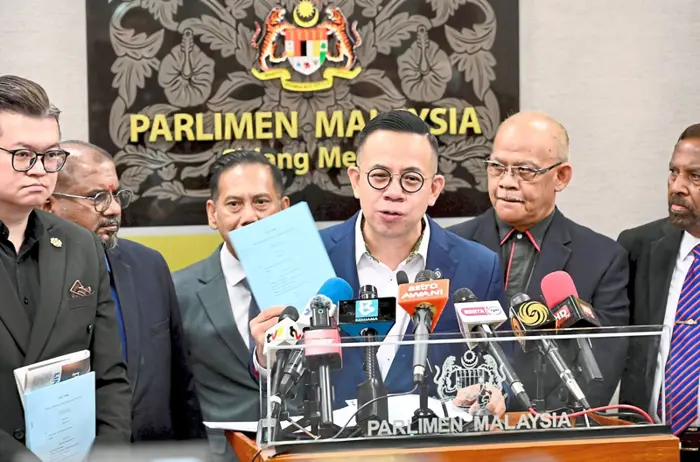
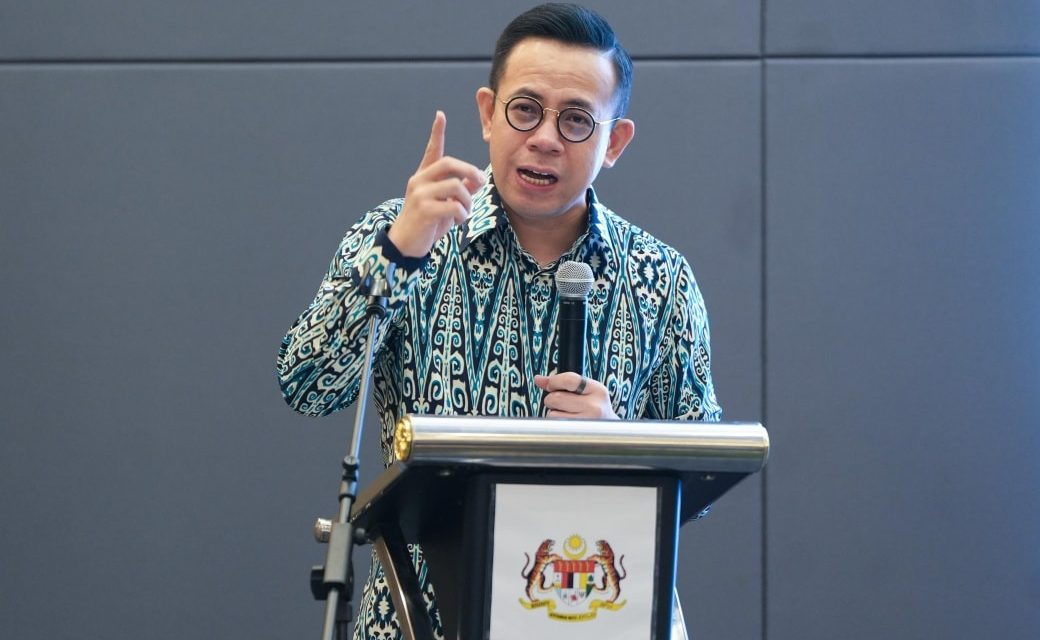
THE Human Resources Ministry (Kesuma) officially presented the first reading of the mooted Gig Workers Bill (RUU) 2025 at the Parliament (media centre) on Monday (Aug 25).
In attendance were Human Resources Minister Steven Sim and deputy secretary-general (policy and international) Dr Mohd Shaharin Umar, as well as various key stakeholders from related industries and e-hailing and p-hailing platforms.
Sim said during the press conference that the drafting of the Bill marks a critical turning point in the nation’s efforts to recognise the important role of gig workers in national labour law, to ensure their rights and welfare are comprehensively protected.
“Last year, the Federal Court upheld the decision that a gig worker cannot seek a claim or bring a dispute to the Employment Court.
“This meant that they could not seek justice in the context of labour institutions,” he said.

“Today, with the first reading of the Bill, it could be the first law to protect gig workers.”
He added that the Bill was not just conceptualised in the halls of Putrajaya, but by taking into consideration the pain points and challenges of all stakeholders.
“The Bill has been drafted after getting feedback and hearing the complaints of all parties. Of course, it will not satisfy everyone, but we have consulted with all those involved.
“I hope that all parties, especially those in Parliament, will make this Bill a success and pass it so that gig workers will no longer have to put their welfare on the line to provide comfort to our lives,” said Sim.
Landmark move
The Bar Council’s Industrial and Employment Law Committee co-chair, Karthigesan Shanmugam, said that the Council welcomes RUU 2025 as an important step to providing a clear legal framework for the growing gig economy.
“The introduction of a statutory definition for gig workers, together with mechanisms for dispute resolution, income protection and social security contributions, represents progress in addressing longstanding regulatory gaps in the sector,” he said.
“We support efforts to ensure fair and balanced protections for all stakeholders in the gig economy, with the shared aim of safeguarding workers’ welfare while fostering innovation and growth in the economic segment.”
Malaysia e-Hailing Coalition (GEM) chief activist Jose Rizal added that the Bill could be a timely reform to change the landscape of the gig economy.
“We understand the concerns and challenges of the community. With the Bill, we could address several key issues that are burdensome to them.
“It could be a game-changer, which will improve the gig industry to be stronger, more protected and more secure.”
Malaysian Professionals Film Workers Association (Profima) president Khalil Salleh said he was delighted that the terms for “gig workers” and “freelancers” could finally be properly defined by law.
“Finally, the definition can be in an official Bill. This is what we will cling to, because we are confident that, with the Bill, our welfare will be protected,” he said.
Interpreters and Translators Association for Selangor and Kuala Lumpur Deaf Community (JUPEBIM) president Lucy Lim said that the Bill will be beneficial for interpreters and translators, whose services have been undervalued.
“This is a recognition for freelance translators and interpreters as an official profession. We want to thank Kesuma for listening to our problems on how we can improve our livelihoods and get the protection we need as gig workers,” she said.
Deaf Advocacy and Wellbeing National Organisation (Dawn) member and Deaf Grab Malaysia Rakan Representative Committee (RRC) member Farid Mahmud echoed Lim’s statements, highlighting the acknowledgement of all gig workers, including the differently abled.
“For the deaf community gig workers, there are many challenges we face when trying to integrate with those who can hear. Many companies do not accept us for employment, which is why we have to resort to gig work to make a living,” he articulated in sign language.
“By having this Bill, we can indirectly uplift the deaf community, so that we will not have any more obstacles and will be free to work knowing we are protected.”
Malaysian Trade Union Congress (MTUC) president Datuk Abdul Halim Mansor reminded everyone of the important role gig workers play in the economy and in society.
“Gig workers have been instrumental in our daily lives – especially during the Covid-19 pandemic. When we were in lockdown, they were still out and about, continuing to provide services to the community,” he said.
“They have been looking for solutions for a long time. But, with RUU 2025, it will let them have peace of mind knowing they are acknowledged for their role in national economic development.”
Meanwhile, Uni Malaysia Labour Centre (Uni-MLC) president Datuk Mohamed Shafie BP Mammal praised Kesuma for its efforts in drafting the Bill.
“I congratulate Kesuma for seeking to break this deadlock between the government and the gig community.
“We need to elevate the dignity of this community, and I hope that the Bill will be passed in time for Merdeka,” he said.
North South Initiative founder Adrian Pereira welcomed RUU 2025, citing that it could aid in reducing manpower turnover and increasing productivity, which will lead to better service quality.
“It uses a ‘win-win’ formula that would help to cultivate a stable and more professional workforce, ultimately benefiting consumers,” he said.
“As the gig economy is dynamic in nature, there is room for continuous improvement built into the Bill. We urge all stakeholders to engage in this process with sincerity and prioritise the welfare of all workers and the nation as a whole.
“This is not just a moral imperative, but the right thing to do for a fair and sustainable future.”
Gig Workers Bill 2025
RUU 2025 comprises 10 sections and 112 clauses, focusing on four main pillars: > Clear statutory definition of a “gig worker”; > Workers’ rights to be involved in negotiations on income issues; > Dispute resolution mechanisms; and > Social protection.
With the first reading and drafting of the Bill, Malaysia could become the 16th country to provide a clear definition for gig workers, representing a step forward in strengthening a fairer, more progressive and inclusive gig economy ecosystem.
Kesuma said it is confident that this will ensure a sustainable and balanced future for over 1.2 million gig workers nationwide and elevate Malaysia’s position as a competitive nation on the international stage.

Raj, M. R. (2025, August 27). Right to a fair gig. The Star. https://www.thestar.com.my/news/nation/2025/08/27/right-to-a-fair-gig
- CASE ANALYSIS: When Silence Becomes Dismissal: The Doctrine of the Brick Wall and Seacera Trilogy
 Post Views: 122
 - PERKESO reforms ensure comprehensive protection for all workers, says HR Minister
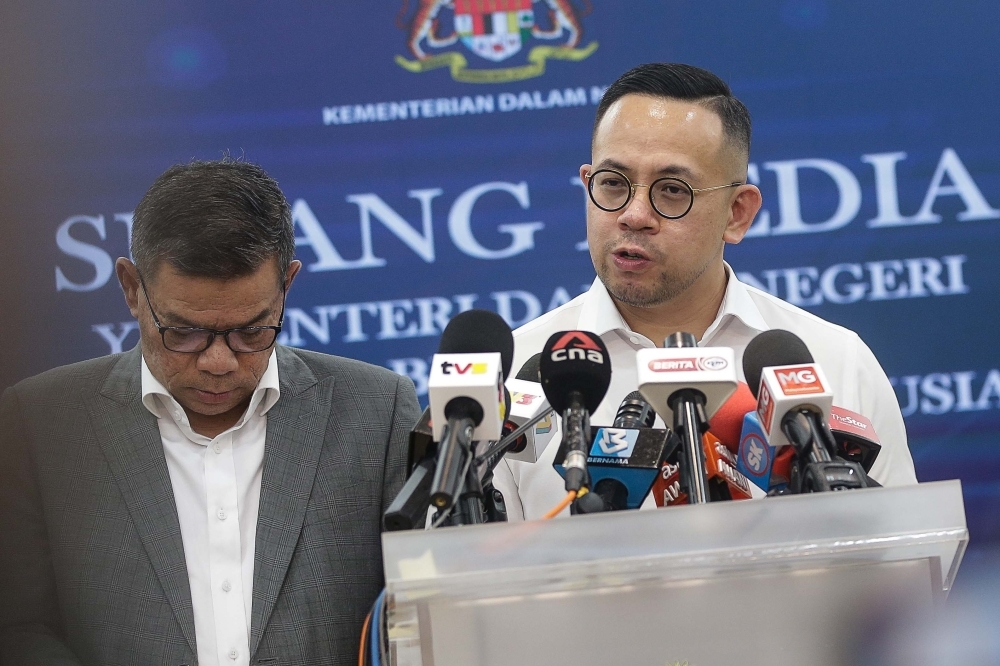 KUALA LUMPUR: The Human Resources Ministry, through the Social Security Organisation (PERKESO), continues to undertake comprehensive reforms to strengthen social protection for all contributors, including gig workers and foreign workers, says Steven Sim Chee Keong. The Human Resources Minister said that 10 major reforms have been implemented over the past two years to provide more […]
 - KESUMA’s drive for fair work and shared progress
 The LIFE AT WORK Awards (LAWA) hosted by Talent Corporation Malaysia Bhd (TalentCorp), celebrates its 10th edition, solidifying its influence as a platform that drives transformation in diversity, equity and inclusion (DEI) in Malaysian workspaces. With concerns regarding human capital rising amid the ubiquity of artificial intelligence (AI), it is crucial now more than ever […]
 - ‘Many employers not making mandatory Perkeso, EPF contributions’
 KLANG: The Human Resources Ministry has detected a worrying number of employers still refusing to register or make mandatory contributions to the Social Security Organisation (Perkeso) and Employees Provident Fund (EPF) for their workers. The ministry stressed that such actions violated employees’ rights and denied them basic protection. Deputy Human Resources Minister Datuk Seri Abdul […]
 - Nearly 500 labour law breach cases detected
 KLANG: Almost 500 investigation papers have been opened against employers for breaches of labour laws as of Nov 1, says Deputy Human Resources Minister Datuk Seri Abdul Rahman Mohamad. Among the most common labour law offences are employers’ failure to make the mandatory contributions to the Social Security Organisation (PERKESO) or the Employees Provident Fund […]
 - MOHR Won’t Tolerate Companies Preventing Workers From Forming Union
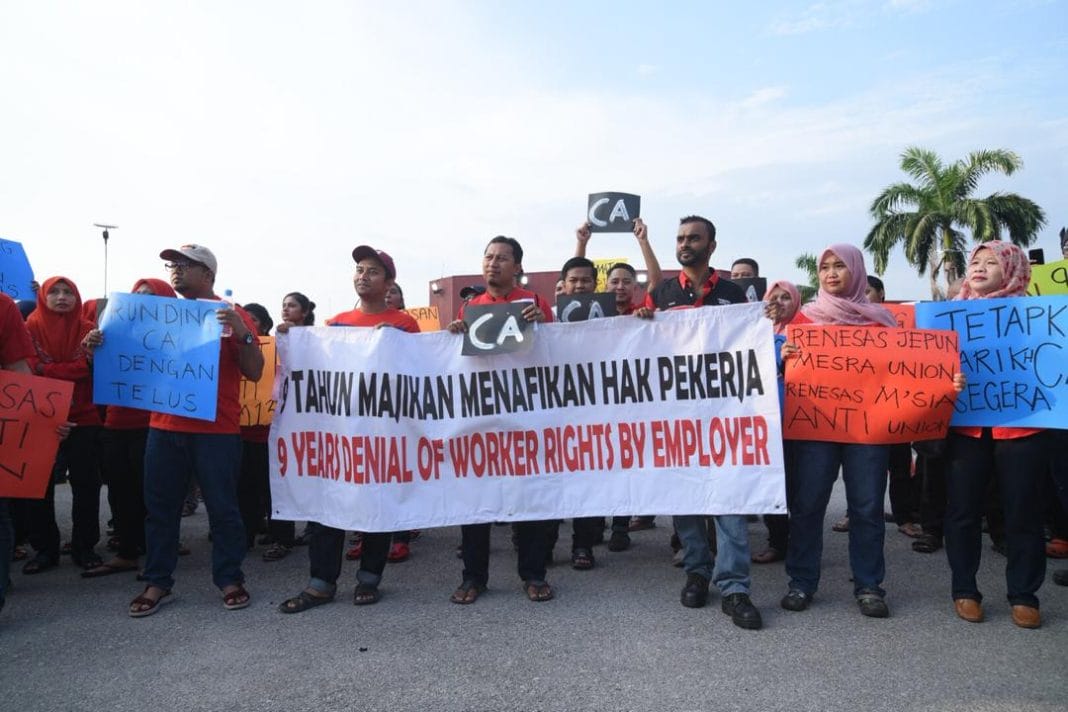 The Industrial Relations Department of the Human Resources Ministry (MOHR) has reaffirmed its commitment to safeguarding workers’ rights after a gathering and memorandum submission by several labour unions concerning alleged union-busting practices. The department emphasised that it respects the constitutional right to peaceful assembly and freedom of speech, while reiterating that workers’ rights to form […]
 - Court Orders Employer To Pay 93 Migrant Workers Outstanding Wages
 Human Resources Minister Steven Sim Chee Keong has welcomed the Shah Alam High Court’s decision to uphold an earlier ruling by the Labour Court, ordering an employer to pay outstanding wages to 93 migrant workers who were left without work upon arrival in Malaysia. The High Court on 31 October 2025 affirmed the Labour Court’s […]
 - No tolerance for employers who withhold wages, says HR Minister
 The Ministry of Human Resources (KESUMA) has urged all employers to take heed of the recent Shah Alam High Court ruling which upheld a decision in favour of 93 migrant workers in an unpaid wage case. Human Resources Minister Steven Sim Chee Keong said the Oct 31 decision sends a strong message that failure to […]
 - THE HEART WORK REVOLUTION
 TEN years after its inception, the Life at Work Awards (LAWA) 2025 marked not just a milestone but a movement that celebrates how Malaysia’s workplaces are evolving with compassion, flexibility and purpose. Hosted by Talent Corporation Malaysia Bhd (TalentCorp), the gala night honoured organisations leading the way in shaping a fairer, more progressive, human-centred world […]
 - Group wants clear framework, pilot projects before expanding EIS to gig workers
 PETALING JAYA: The Malaysian Industrial, Commercial and Service Employers Association (Micsea) has called on the government to set a clear policy framework and run pilot projects before expanding the Employment Insurance System (EIS) to gig and platform-based workers. The association said the plan, announced by human resources minister Steven Sim in the Dewan Rakyat on […]